

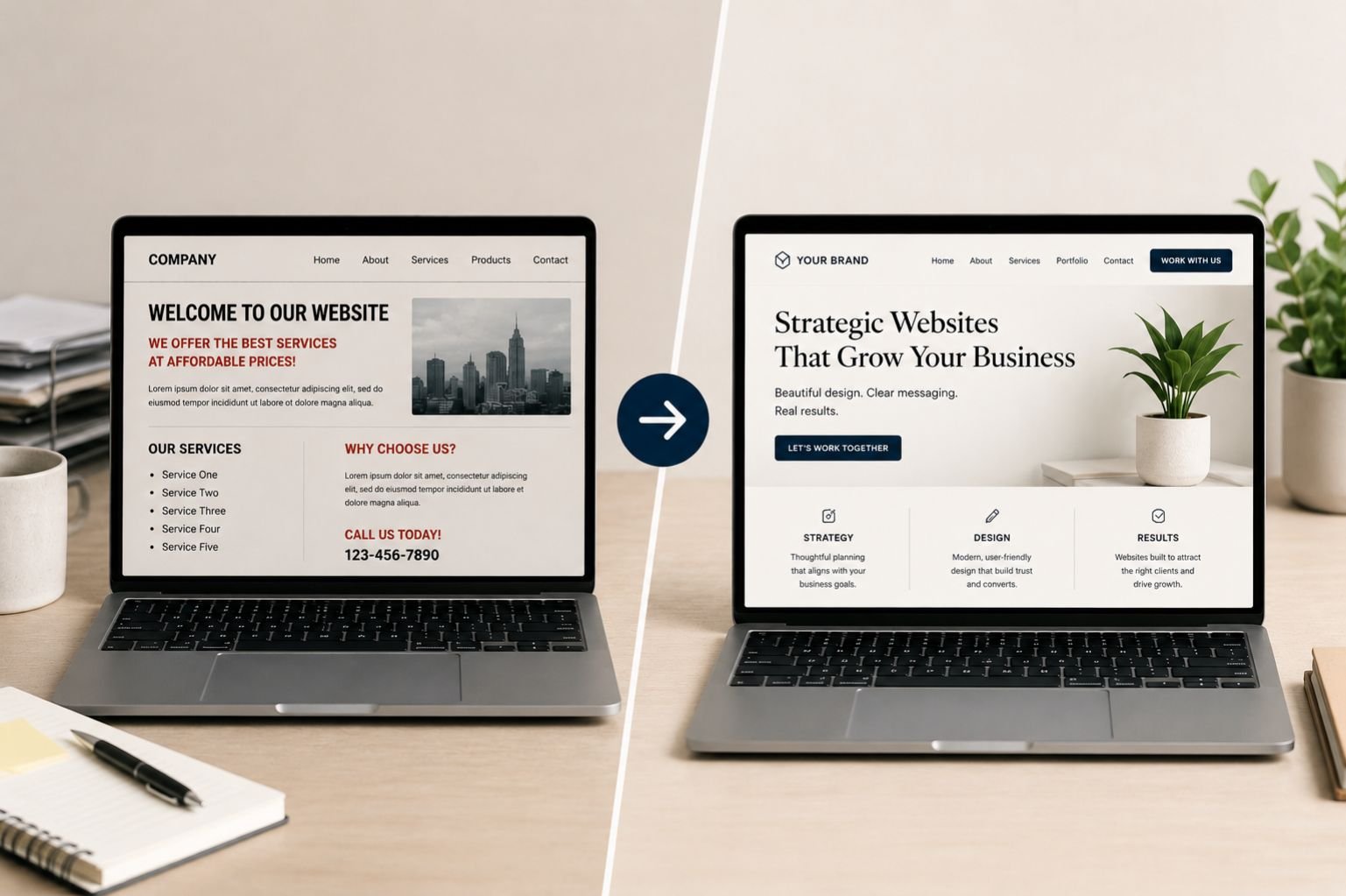
Why Most Small Business Websites Don’t Convert (And How to Fix It)
A website can look modern and still fail to generate leads, sales, or inquiries.
One of the biggest misconceptions in web design is that a visually attractive website automatically performs well. In reality, many small business websites struggle because they are missing the structure, messaging, and user experience needed to guide visitors toward action.
A high-performing website should do more than just exist online. It should help build trust, communicate clearly, and make it easy for potential customers to take the next step.
What Does “Conversion” Actually Mean?
A conversion is any action you want a visitor to take on your website.
That could mean submitting a contact form, scheduling a consultation, making a purchase, requesting a quote, signing up for a newsletter, or calling your business directly.
If people are visiting your website but not taking action, there is usually a disconnect somewhere in the user experience.
1. Your Messaging Isn’t Clear
Many small business websites focus too heavily on visuals without clearly explaining what the business does, who it serves, why it matters, or what visitors should do next.
When someone lands on your homepage, they should immediately understand what you offer, who it’s for, and how it helps them.
How to Fix It
Use simple, direct messaging that communicates value quickly.
A strong homepage should include a clear headline, a supporting subheadline, and a visible call-to-action that focuses on customer problems and solutions rather than just describing the business.
2. Your Website Is Difficult to Navigate
Confusing menus, cluttered layouts, and inconsistent structure create friction.
If visitors cannot quickly find your services, products, pricing, or contact information, they are much more likely to leave the site entirely.
How to Fix It
Focus on clean navigation and intentional page structure.
Good navigation should feel intuitive, reduce unnecessary clicks, and guide users naturally through the website. The goal is clarity, not complexity.
3. Your Website Isn’t Mobile-Friendly
Most website traffic now comes from mobile devices, yet many small business websites are still designed primarily for desktop viewing.
Tiny text, oversized images, broken layouts, difficult navigation, and slow load times can immediately hurt conversions and frustrate users.
How to Fix It
Make mobile responsiveness a priority from the beginning.
Your website should load quickly on phones, use readable text sizes, maintain clean spacing, and keep navigation simple and easy to tap.
A strong mobile experience directly affects engagement and conversion rates.
4. Your Website Loads Too Slowly
Website speed affects user experience, bounce rates, SEO performance, and conversions.
Visitors expect websites to load quickly. If pages feel sluggish, many users leave before they even see your content.
How to Fix It
Some of the biggest speed improvements often come from optimizing images, reducing unnecessary plugins, improving hosting quality, and simplifying scripts or animations.
Fast websites feel more professional, polished, and trustworthy.
5. Your Calls-to-Action Are Weak or Missing
Many websites never clearly ask visitors to take action.
Generic buttons like “Learn More” or “Click Here” often lack direction and intention.
How to Fix It
Use stronger calls-to-action that clearly communicate the next step.
Simple phrases like “Start Your Project,” “Request a Quote,” or “Schedule a Consultation” help guide users more confidently through the site.
Your CTA should feel visible, intentional, and easy to find throughout the website.
6. Your Website Doesn’t Build Trust
Visitors often decide within seconds whether a business feels credible.
Outdated design, inconsistent branding, poor-quality visuals, or missing information can quickly reduce confidence.
How to Fix It
Add trust-building elements like testimonials, project examples, case studies, professional photography, and consistent branding throughout the site.
Trust is one of the biggest factors influencing conversions.
7. Your SEO Structure Is Weak
Even a beautiful website cannot convert visitors if nobody finds it.
Many small business websites are missing clear page structure, optimized headings, keyword targeting, internal linking, and properly optimized images.
How to Fix It
Build SEO into the structure of the website from the beginning.
Strong SEO starts with organized content, optimized metadata, mobile responsiveness, fast performance, and valuable content that answers user questions clearly.
SEO and user experience support each other far more than most businesses realize.
8. Your Website Focuses Too Much on the Business Instead of the Customer
Many websites spend too much time talking about company history, internal processes, or features without clearly explaining how those things benefit the customer.
Visitors care most about solving their own problems.
How to Fix It
Shift your messaging toward customer goals, outcomes, solutions, and benefits.
Your website should help visitors feel understood and confident that your business can help them.
Building a Website That Converts
A high-converting website is rarely about flashy design alone.
The websites that perform best usually share a few common qualities: clear messaging, intuitive navigation, fast performance, strong mobile usability, trust-building design, and thoughtful SEO structure.
When those elements work together, your website becomes more than just an online presence. It becomes a tool that actively supports business growth.
If your current website feels outdated, confusing, difficult to manage, or simply isn’t generating results, improving the structure and user experience can often make a bigger impact than a full redesign alone.